
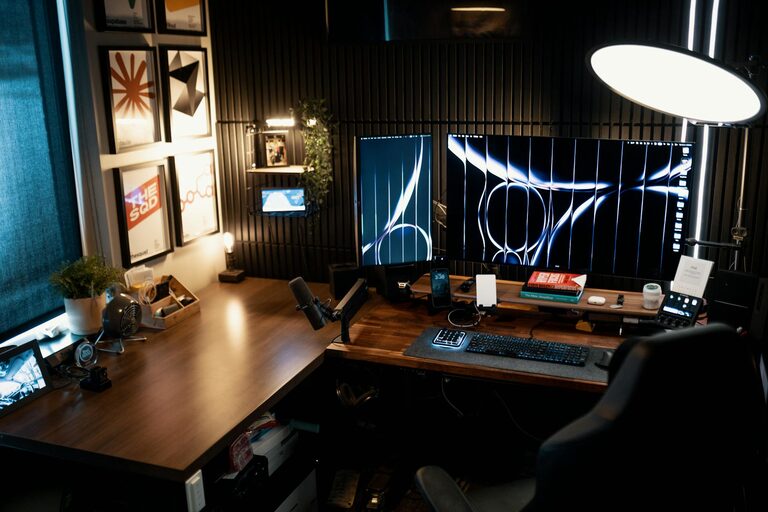

Creating a productive home office environment is essential for anyone working remotely or spending significant time at home on professional tasks. The right setup can enhance focus, reduce distractions, and support a healthy work-life balance. Here are some practical tips to help you design an efficient and comfortable home office.
1. Choose the Right Location
The first step in creating a productive workspace is selecting an ideal spot in your home. Look for a quiet area with minimal foot traffic. If possible, choose a room with a door to separate work time from household activities.
Avoid working from your bed or couch as this can blur the boundaries between relaxation and work, making it harder to concentrate.
2. Invest in Ergonomic Furniture
Comfort is key when spending hours working. Ergonomic furniture reduces strain and helps maintain good posture.
– Desk: Find a desk with enough surface area to accommodate your computer, notebook, and other essentials.
– Chair: Choose an adjustable chair with lumbar support to prevent back pain.
– Monitor height: Position your monitor so the top is at or just below eye level to avoid neck strain.
If budget allows, consider accessories like a standing desk converter or an ergonomic keyboard and mouse.
3. Optimize Lighting
Good lighting reduces eye strain and can improve mood and alertness.
– Natural light: Place your desk near a window to benefit from daylight, which energizes and refreshes.
– Task lighting: Use a desk lamp to illuminate your workspace evenly, especially during evening hours.
– Avoid glare: Position screens perpendicular to windows to eliminate reflections, which can cause discomfort.
4. Declutter and Organize
A messy workspace can distract and overwhelm you.
– Keep essentials close: Store frequently used items like pens, notebooks, and chargers within arm’s reach.
– Use storage solutions: Shelves, filing cabinets, and drawer organizers help keep papers and equipment tidy.
– Limit decorations: Personal touches are fine but avoid overcrowding to maintain a clear work mindset.
5. Minimize Distractions
Distractions can erode productivity. Try these strategies:
– Noise control: Use noise-canceling headphones or play background music to block out household sounds.
– Manage notifications: Turn off non-urgent alerts on your phone and computer while working.
– Set boundaries: Communicate your work hours to family or roommates to reduce interruptions.
6. Personalize Your Space Thoughtfully
Adding elements that inspire and motivate can improve your work experience.
– Plants: Indoor plants improve air quality and add a calming effect.
– Artwork: Visual pieces you enjoy can boost creativity.
– Comfort items: A cozy blanket or a small essential oil diffuser can enhance comfort without crowding your space.
7. Establish a Routine and Break Schedule
A productive environment supports a consistent routine.
– Start and end times: Set regular work hours to create structure.
– Scheduled breaks: Take short pauses to stretch, hydrate, and rest your eyes every hour.
– Movement: Incorporate some physical activity to counteract prolonged sitting.
8. Use Technology Wisely
Leverage tools that help you stay organized and efficient:
– Task management apps: Tools like Trello or Asana can keep projects organized.
– Video conferencing: Equip your office with a good webcam and microphone for smooth virtual meetings.
– Cable management: Use clips or sleeves to keep cords neat and prevent tangling.
9. Maintain Air Quality and Comfort
Your physical comfort affects mental clarity.
– Ventilation: Open windows or use an air purifier to keep air fresh.
– Temperature control: Adjust heating or cooling to maintain a comfortable workspace.
– Hydration: Keep a water bottle nearby to stay hydrated throughout the day.
Conclusion
Designing a productive home office isn’t just about aesthetics—it’s about creating a space that supports your focus, comfort, and workflow. By choosing the right location, investing in ergonomic furniture, optimizing lighting, organizing smartly, and setting clear boundaries, you can improve both your efficiency and work satisfaction. Implement these tips, and you’ll find working from home becomes a more enjoyable and successful experience.